


CSR Racing Is Driving Off The Screen And Into Car Culture
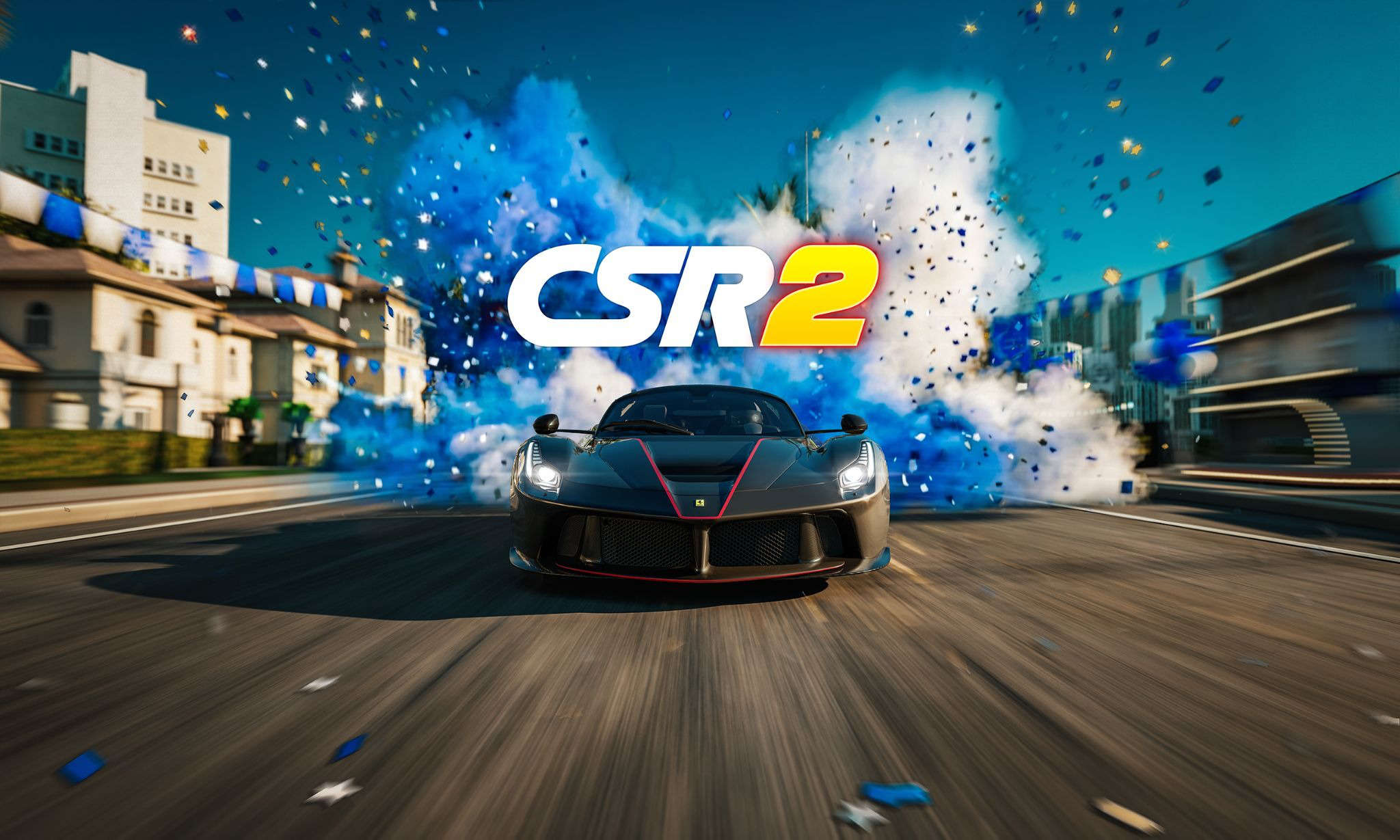
Most mobile games live and fade inside the App Store, topping the download charts for a season before the next release takes their place, and few leave a mark on the culture beyond the screen. Racing franchises have long been an exception, the kind of games people grow up with and keep playing for years. Even so, few have tried to plant themselves in the physical world the way CSR Racing is doing now. A decade into its run, the drag-racing franchise is rolling out a line of limited-edition die-cast scale model kits, tactile collectibles that have more in common with a shelf of Lego or radio-controlled cars than with a typical in-app purchase.
James Hans, Executive Director of Licensing & Partnerships at NaturalMotion Games, has spent nearly 30 years building racing games, about half of that time on console and including four entries in the Need for Speed franchise. He joined NaturalMotion to build CSR 2 and has steered the franchise ever since its 2016 launch. Over those years, he has come to treat CSR as a living archive of car culture, a place where players, builders, brands, and collectors can all see themselves reflected. The same framing has guided its move from a free-to-download app into sponsorships, official partnerships, and now physical goods.
“We are bringing out cars every few weeks continuously and have been doing so for 10 years. Every car has a story, ‘Who built that? Wasn’t that the car from that movie?’” says Hans. Each one is picked deliberately and arrives with a backstory, which keeps a decade of releases from blurring into an anonymous feed of vehicles. For Hans, the cars are only the surface of a larger ambition. He wants CSR to become one of those games fans bring up on their own when they talk about what first got them into cars. His answer has been to build CSR into something bigger than an app, a brand car lovers can recognize, talk about, and eventually hold.
A museum in your pocket
Players who open CSR are building a collection, the digital equivalent of the physical hobby of amassing model cars. “Instead of having your room full of all these kits and not having enough room for them all and having to dust them, we are a virtual version of that,” Hans notes. “We’re a car collection in your pocket.” Players can build a dream garage to a level of detail he claims no other mobile game matches. The catalog spans production cars, classic muscle, film vehicles like the Fast and the Furious tuners and the Back to the Future time machine, and one-off builds owned by the real people who helped create them, all coexisting in what he calls a museum that keeps growing.
The collection doubles as a social object, because in Hans’ view, car culture runs on roughly two degrees of separation, a community where everyone knows everyone and any vehicle is an invitation to start talking. CSR is built to spark the same exchange, especially at a moment when its players are looking for somewhere uncomplicated to spend their attention. “In the world we’re in right now where things are quite uncertain, cars are a little bit of a respite,” says Hans. “It’s escapism, it’s a hobby, there’s no pretense.”
Off the screen, into car culture
The die-cast kits are the most tangible expression yet of a longer journey. CSR began as a licensee, simply putting other companies’ cars into its game, and spent years earning its way toward official partnerships with names like Lamborghini and the late rally driver Ken Block. Hans treats each of those wins as a door to the next one. “As each one that we do opens new doors to other things, you build a network of people in car culture,” he says.
Physical goods carry that logic off the screen. Hans points to the way fans engage with the brands and films they love, reaching for a poster, a T-shirt, or a model to mark that they were there for it, and he wants the same for CSR. The kits immortalize a decade of digital collecting in something a fan can finally hold. “I’d love for our fans to be able to go and collect a piece of that, something that they can have at home in the same way that people do with Lego or radio control cars,” he adds.
What separates the effort from a standard merchandise grab is how much of it runs in both directions. CSR has been a fixture at SEMA, the Las Vegas aftermarket show, for the last two years, and its builder competition recreates the winning real-world car in the game the following year. For the builder, the payoff can keep going, since that same car might one day become a die-cast model, turning the game into a reason to show up rather than something to advertise. “It becomes a reason to be a part of that competition, to compete against other builders,” Hans notes. “Their passion that they put into that pollinates and becomes something that they didn’t expect.”
Letting the car lead
Underpinning the entire push is a constraint Hans is candid about. Unlike most franchises in the Zynga and Take-Two portfolio, CSR owns no original characters or worlds, amounting to little more than a logo with almost nothing to sell by the usual merchandising math. Hans reframes that limitation as a discipline: because CSR cannot lean on invented characters, every decision begins with the car itself and the story attached to it. “If a car has a story to it, the car almost elevates itself to become something that could leave the game,” he explains.
He compares the process to casting a film, with the cars as the actors and his team auditioning real vehicles to fit a brief. The same instinct decides what leaves the game: a car earns a die-cast kit not because a brand wants the placement, but because the car is interesting enough to carry one. It is a deliberately patient strategy, built on small, repeated moves rather than one splashy launch, and the collectibles are simply the latest ripple in a brand that keeps finding new places to surface. None of it follows a template, which leaves Hans treating the whole effort as an open question about how far car culture can carry a mobile game. “We thought, ‘Wouldn’t it be cool to enable our players to interact with the brand more, so let’s just try this and see what happens,’” he concludes.”Now that it has happened, let’s see the audience’s appetite for this and whether they’ll want more. Hopefully they do, and we’ll continue to do more.”